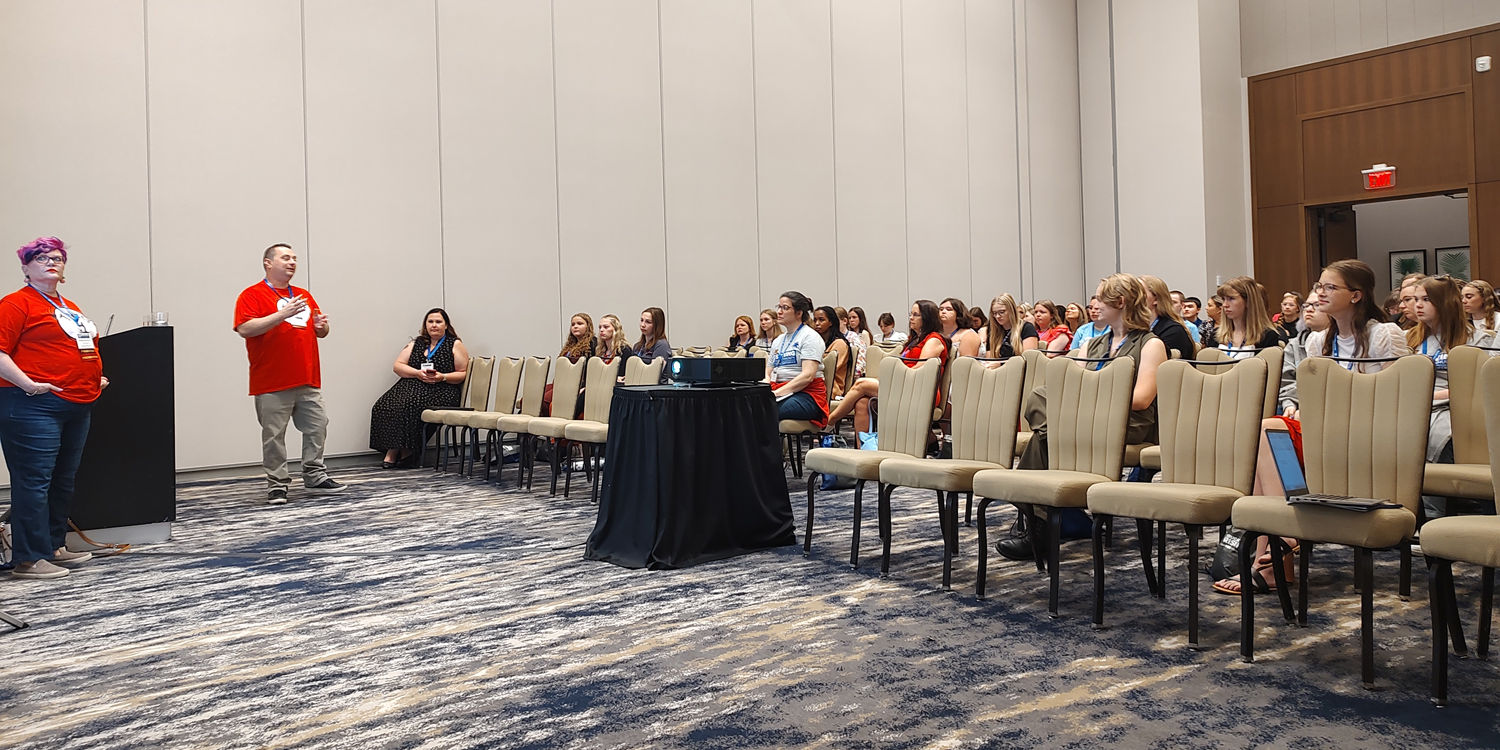
An education career can be about so much more than teaching, said Michael McCabe and Kimber Underdown of Grand Canyon University in their Friday morning breakout session titled “All Roads Lead to Education.” When McCabe and Underdown began their careers as teachers, they had no idea that their path would lead them to becoming college professors who prepare teachers for their own careers.
As McCabe said, “Life changes. Things happen, and you realize you can make a difference in a different place.” Sometimes you start out wanting to do one thing, but you realize it isn’t for you, or your circumstances change, he said, and you find yourself in a job you never would have chosen but end up loving.
They opened their session by asking students to think of one education profession that is not being teacher. As students responded with their phones, they generated a word cloud that displayed an array of possibilities: Counselor, principal, paraprofessional, janitor, superintendent.
In education, McCabe and Underdown explained, there’s always someone who helps a professional be a professional. Cafeteria workers, for example, have an essential function within a school, and they affect students every day. A teacher probably wouldn’t know how to operate food preparation equipment, so the skills of the food service team make a difference to all students, especially those who may not get full meals at home.
Students broke into groups to discuss careers that generally are considered to be outside of education and explored how, from preschool to higher education, someone helped people in those careers to become who they are. And in a share-out session, students named a variety of careers, both inside and outside schools, that affect students indirectly, from human resources to maintenance to technology support. Students left with an expansive view of what it means to support students, education professionals, and schools.

PO Box 13090
Arlington, VA 22219
(812) 339-1156 (10am-4pm ET)
info@educatorsrising.org
media@pdkintl.org
Payment Remit Address:
P.O. Box 745955
Atlanta, GA 30374-5955
© 2026 Educators Rising. All Rights Reserved. | Privacy Policy
All pricing subject to change, our current price is what is reflected on the website.