Close your eyes and imagine the year 2035. You’re a parent getting your child ready for the first day of school. You’re nervous and decide to walk them to school. You enter the classroom and see the teacher for the first time. What does the teacher look like?
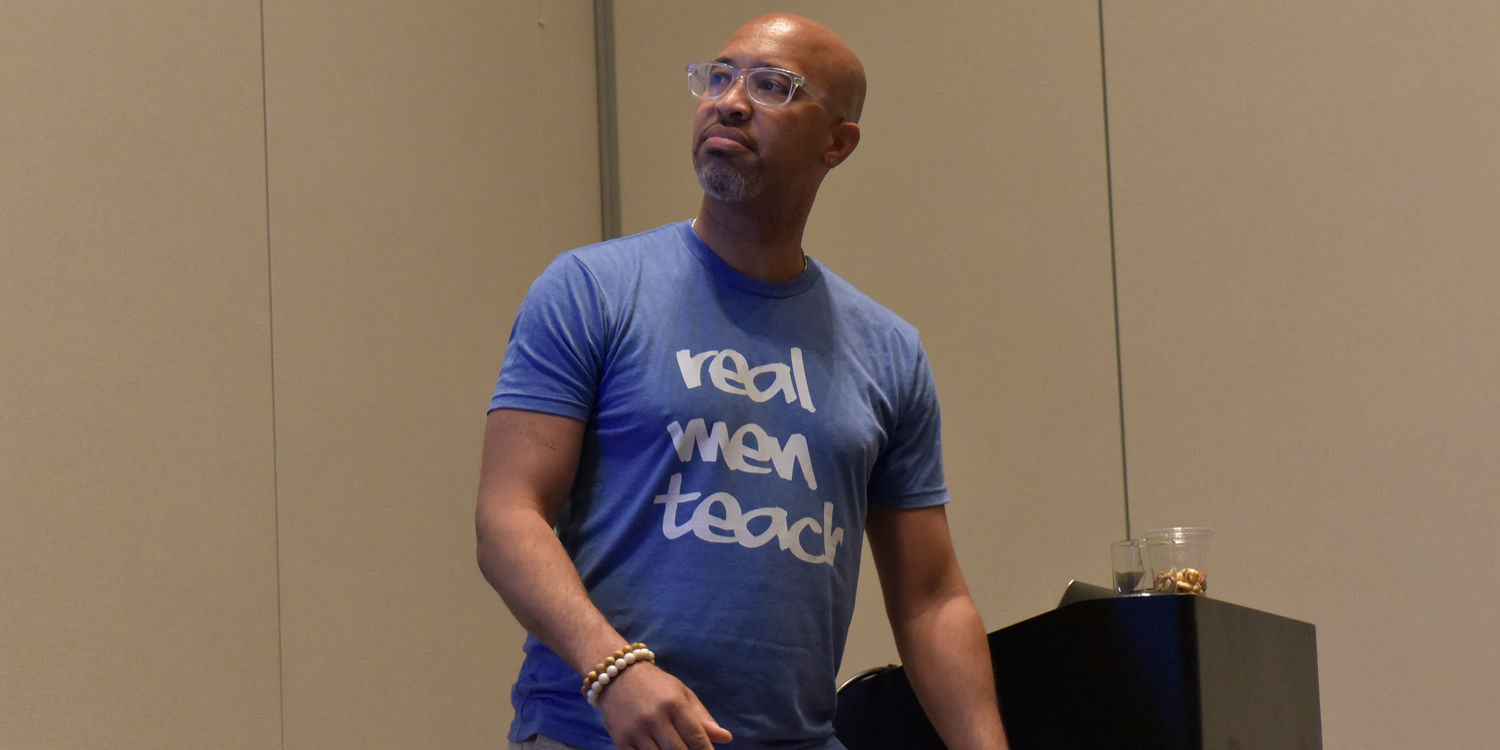
When Curtis Valentine of Real Men Teach asked this question of students at his session, several of them pictured their childhood teacher. According to Valentine, this is no surprise. We tend to project our histories into the future, he said. It’s important to unpack where the images in our minds come from. In other words, “in order to go forward we have to go back.”
Certain ideas about men, especially men of color, guide people’s understanding of who they are and what they can be. Men of color have been teaching in this country for hundreds of years, but images of these teachers are not what dominate the media. As a Black man, when Valentine searches for images of “people who look like me,” he’s subject to a barrage of stories about crime and criminals, all of which sends the message that Black men are threatening. “The world says that you’re allowed to be afraid of me.”
He asked attendees to share what they think of when they see the phrase “Black man.” They responded with a variety of images: That they’re undereducated, have few opportunities, are victims of police violence, or that they have big and boisterous personalities. In schools, certain assumptions about Black men affect their professional pathways. For example, they might be called upon to handle discipline of students, colleagues might assume they teach PE, and parents might question whether they should be teaching little kids or high school girls.
Valentine’s organization seeks to change the narrative through community, connection, and content. Black male educators often are the only one in their district, and Real Men Teach gives them a community. As members of a community, they help other men who have common interests to find each other. And they flood social media with content, including images of men wearing Real Men Teach gear or sharing their stories.
To support the work, those who believe in the mission can get the gear, donate to the scholarship fund, and follow them on social media. “It’s going to take a long time,” he said, “because we didn’t get here overnight.” But with enough support, they can take the message everywhere — from the metaverse to the NFL and beyond.

PO Box 13090
Arlington, VA 22219
(812) 339-1156 (10am-4pm ET)
info@educatorsrising.org
media@pdkintl.org
Payment Remit Address:
P.O. Box 745955
Atlanta, GA 30374-5955
© 2026 Educators Rising. All Rights Reserved. | Privacy Policy
All pricing subject to change, our current price is what is reflected on the website.